A Declaration of Interdependence: Rethinking Freedom in Recovery
Related Episode
A Declaration of InterdependenceTonight the sky lights up. Flags drape porch rails, grills sizzle in the July heat, families press shoulder to shoulder beneath bursts of color, and each firework writes “independence” big across the summer dark before it fades. But sitting with the voices of this recovery community—people who’ve traveled winding, uneven roads through mental health and addiction—I kept arriving at the same quiet realization. We’ve been handed the wrong version of freedom.
We’re told it’s bright. Loud. Victorious. And solitary.
Real recoveries don’t work that way. They’re quieter, steadier. They show up night after night, lighting the way back not just for ourselves, but for anyone who needs to see that small, unwavering glow. Fireworks shout, stand alone. Recovery whispers, leave the porch light on—someone might be coming home.
What if the most revolutionary act in recovery isn’t standing alone? What if it’s letting someone in?
What if getting it wrong the first time is part of how it works?
America’s Declaration of Independence rested on the idea of self-governance—a people answering to no one but themselves. And yet the story, like our own, was never truly finished. Its promise of equality left many outside the room. Enslaved people had no path to that equality at all. Native nations weren’t consulted. Women wouldn’t touch a ballot for another 144 years.
Unfinished. Still being written.
I think about this whenever someone—fresh into recovery or decades into it—asks why their freedom doesn’t fit the fireworks model. Why the first try isn’t the last. Why some days it feels barely possible. That unfinishedness isn’t failure. It’s proof you’re still writing. Personal freedom, especially when trauma or addiction is woven through the story, rarely arrives in one clear, shining moment. It arrives in rewrites. In slow reconsiderations. In the courage to pick the pen back up.
So what if we treated recovery as a collective manuscript? Not a single, glorious page—but a living document, still being drafted, with room for more voices, more chances to get it right?
Have you ever felt like you’re living someone else’s version of you?
When I asked the community what freedom means inside recovery, nobody mentioned flags. Not once. Instead, one after another, the responses circled something most of us have quietly battled: the weight of a story told about us before we ever had a chance to say, that’s not me.
There’s no shame in recognizing that. It doesn’t mean you failed to resist the narrative. It means the narrative was loud, and you were human.
One person named it plainly: freedom is freedom from labels. From identities never chosen for themselves in the first place. Another spoke of refusing every program and label stamped on by society, by family history, by the mental health care system, by the media, by their own inherited self-stigma. A third put it simply: freedom, for them, means not taking any medications at all.
These aren’t declarations of total self-sufficiency. They’re quiet declarations of sovereignty.
The humanistic psychologist Carl Rogers wrote about “conditions of worth“—the invisible price tags people attach to our value, the rules we must follow to deserve love or belonging. Shedding those conditions, taking the price tags off your worth, is how you finally get to choose who you are. When a diagnosis becomes a burden or a family’s disappointment soaks into your sense of self, it’s not just painful. It’s a counterfeit story, creeping in, trying to rewrite what’s possible for you.
Most of us know a label that clung too tightly. Weak. Difficult. Addict. Crazy. Lost cause. The black sheep. Each one is a narrow lane on a limitless highway.
Recovery, it turns out, isn’t only the process of shedding substances or psychiatric symptoms. It’s rewriting the biography, sentence by sentence, with your own hand. And beneath every label someone else placed on you—there was always someone whole underneath it. The whole person was there the entire time.
What if needing someone isn’t the weakness you’ve been told it is?
Here’s what I didn’t expect. When I asked about freedom, several people described it as something found inside relationships—not something grasped alone.
One leaned on God to endure their hardest days. They called it a privilege, a genuine form of freedom, to have a relationship strong enough to help carry a weight they couldn’t carry by themselves. Another described freedom as having a friendship with your own mind—one that loves you back, that learns to trust itself. A third spoke of trusting yourself enough to make the informed choices that are best for you.
The myth of Independence Day tells us freedom means needing no one. These three people are living proof it can mean finding the right ones to need.
Martin Buber, the philosopher, called this the difference between *I-Thou and I-It*. One treats a person as an object to be fixed or managed. The other meets them as a soul—a direct, mutual encounter where you arrive fully, without trying to extract anything. Modern trauma therapy echoes this: learn to treat your own mind as a friend, not an adversary. Calm, curious, compassionate, steady enough to hold your hardest parts without flinching.
There’s nothing weak about needing. The real risk is mistaking isolation for strength.
Recovery is rebuilt, brick by brick, in moments of relationship that look invisible from the outside. For many people, those moments count as nothing less than survival.
If you’ve ever wondered whether the problem was really you
What breaks the cycle of addiction? Willpower alone rarely does it. Strict abstinence can help, but something deeper is at work beneath the surface.
In the 1970s, psychologist Bruce Alexander ran an experiment that became known as Rat Park. Isolated rats, given a choice between plain water and morphine-laced water, chose the morphine—again and again, sometimes to the point of death. But when rats were placed in a large social enclosure, with other rats, room to roam, and the same two bottles of water, they barely touched the drugged water. The substance didn’t change. The context did. The presence of belonging, of relationship, shifted everything.
What changed the outcome wasn’t willpower. It was connection.
As the writer Johann Hari summarized it: the true opposite of addiction isn’t sobriety. It’s connection.
The real work of recovery, then, might have less to do with ironclad resolve than with building your own version of that environment—human-scale, of course. Places, routines, and relationships where you’re not white-knuckling through another hard day, but finally setting down the armor. A path to walk with people who care whether you arrive.
The courage to keep trying
None of this came from grand declarations. It came from a small, honest handful of voices willing to say what their textbooks never named. One person in particular stayed with me.
They wrote that freedom means being able to live and thrive despite a serious mental illness—that the illness doesn’t get to be the ceiling on what they build. And on the days they don’t find themselves thriving? Freedom means choosing not to give up. Trying again the next morning, and the morning after that.
And here’s what that tells me: suffering and agency aren’t opposites you have to choose between. They can exist in the same person, on the same day. The pendulum swings both ways—which means it can swing back. Choosing to try again is that motion beginning. Not a dramatic reversal. Just one degree.
If you’re reading this in any stage of recovery—or white-knuckling through another hard summer—let these words land as witness. You don’t have to finish the story tonight. Unfinishedness might be the most honest measure of growth there is.
Want to try something small? Here’s what it looks like
These aren’t assignments. They’re invitations—and they cost you nothing. Either one takes less time than a commercial break. You don’t have to do both, and you don’t have to do them today.
The Label Reflection (two minutes or less)
Sit quietly. Choose one label—a diagnosis, a family name, an old script, a role you didn’t ask for—that you’ve worn too long. Ask yourself honestly: Is this mine, or did it just get here first? Is it true, or just old? If it’s neither, thank it for what it taught you, and imagine setting it down. Just for today. Most people say it feels less like loss and more like setting down something heavy they forgot they were carrying.
The Connection Scan (under sixty seconds)
At the end of the day, notice one moment when you leaned on someone—even if it was only remembering their advice, borrowing their calm, or talking to the steadier part of your own mind. Let yourself call that moment freedom. It counts.
You’re not meant to do this alone. And you’re not lesser for needing company.
The porch light
Recovery doesn’t look like crossing a finish line solo, arms raised in solitary victory. It looks more like learning to leave a light on. Trusting that somewhere, someone is finding their way home by that glow.
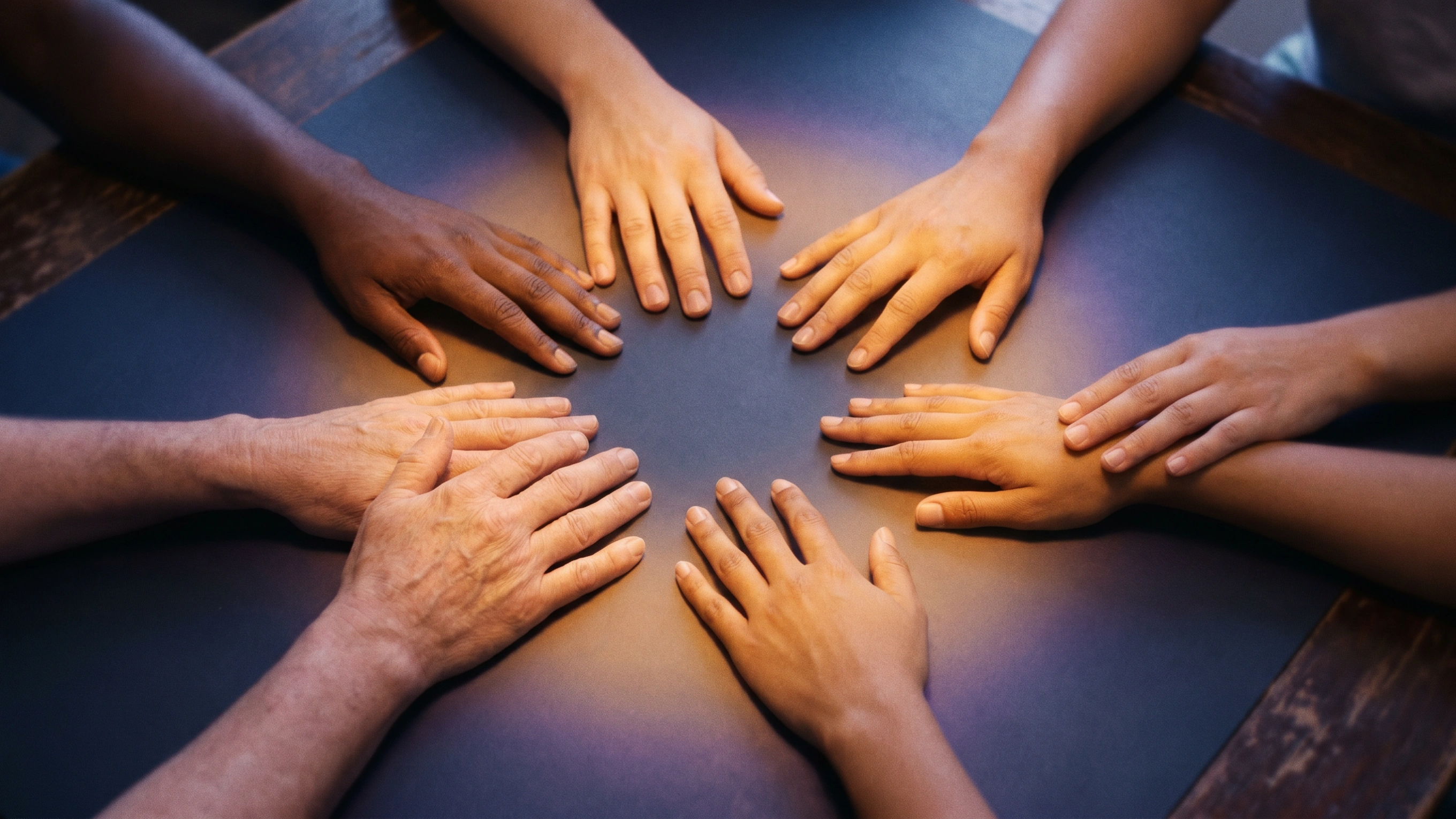
On any day you need to feel unbothered and loved—and on every day you don’t—the freedom that heals looks more like a circle than a straightaway. More like a quilt stitched from many hands than a single, tattered flag. If today didn’t feel like freedom, you’re still part of the story in progress.
No one needs to light up the sky solo. All that’s asked is that you leave the porch light burning—not as a signal of isolation, but of welcome. Proof that nobody has to finish this journey by themselves.
You’re not alone. Not now. Not ever.